
September 13, 2026
Tabiquo: The Most Complete Product I've Shipped So Far
A couple of years ago I sat in a small renovation studio here in Valencia and watched them run a six-figure project out of a WhatsApp group. Site photos, client questions, the electrician running late, a delivery note photographed against a van door, all scrolling by in one thread. Hours lived in an Excel file on one laptop. The next estimate was being written by hand, on a Sunday, because that was the only time nobody called.
Nothing about it was stupid. Everyone already has WhatsApp and Excel. The problem is none of it adds up: nobody could tell me, without twenty minutes of scrolling, how many hours had gone into a project or where the latest version of a document was.
That's the gap Tabiquo fills. The tagline is literally "Stop managing construction projects with WhatsApp and Excel," and I mean it as a description of the customer, not an insult.
Why I built it
Most things I've shipped were one surface: an app, a site, a backend. Tabiquo needed three faces, because the people involved in a renovation have almost nothing in common. The studio wants density and control. The worker on site wants one screen that answers "what do I do today" and doesn't get in the way of holding a drill. The client wants to feel informed without being buried in costs and margins.
A single web app would have solved one of those and annoyed the other two. So it became a web admin panel, a mobile field app, and a client app, all on the same backend. That's why it's the most complete thing I've shipped: no role is left doing their part in WhatsApp.
The admin panel
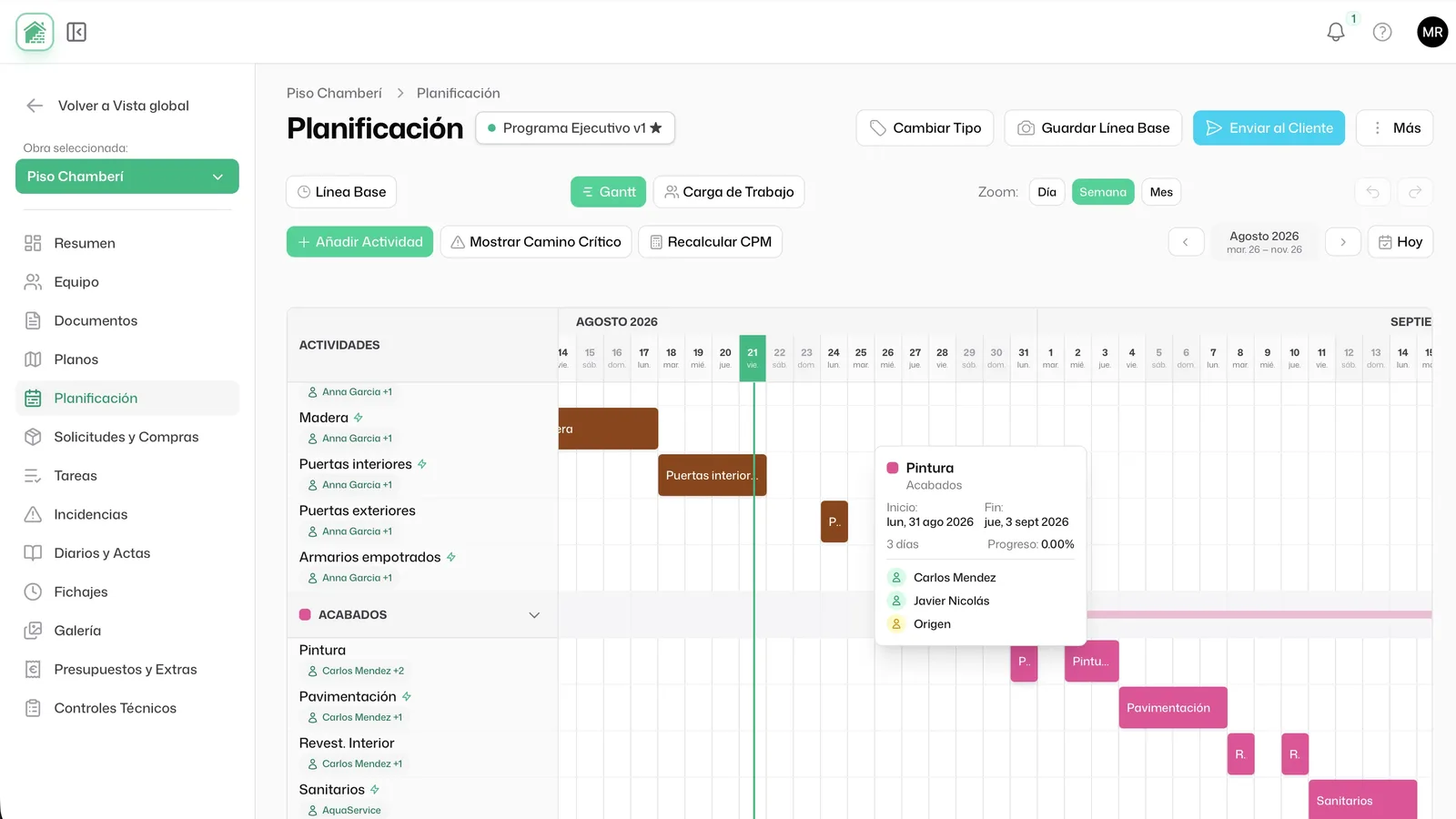
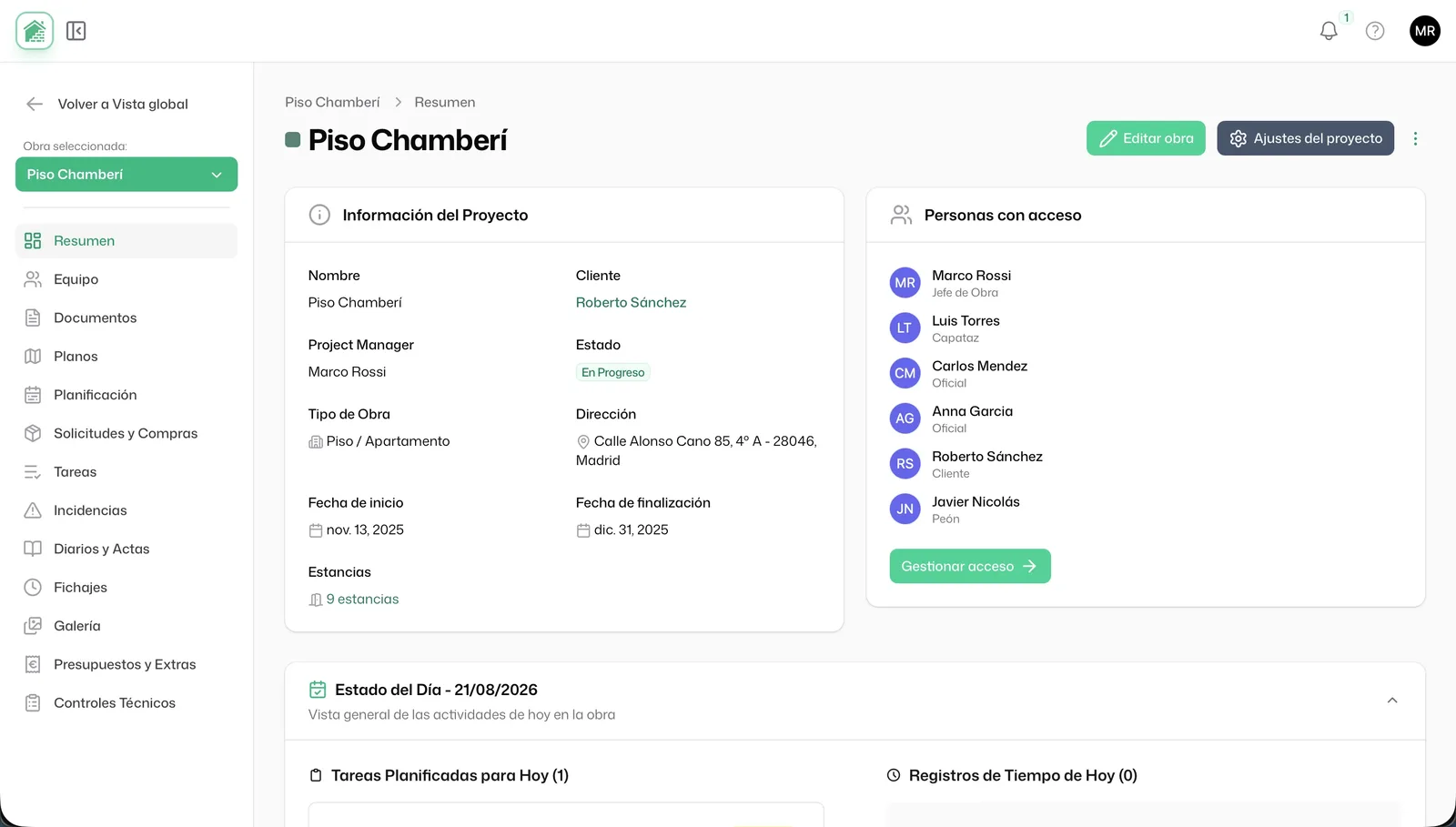
The admin panel is where the studio lives. Gantt planning with phases and milestones, real-time cost control, budgets and certifications, document management with versioning so "the latest plan" is an actual concept and not a guess. A new project is up in under 10 minutes.
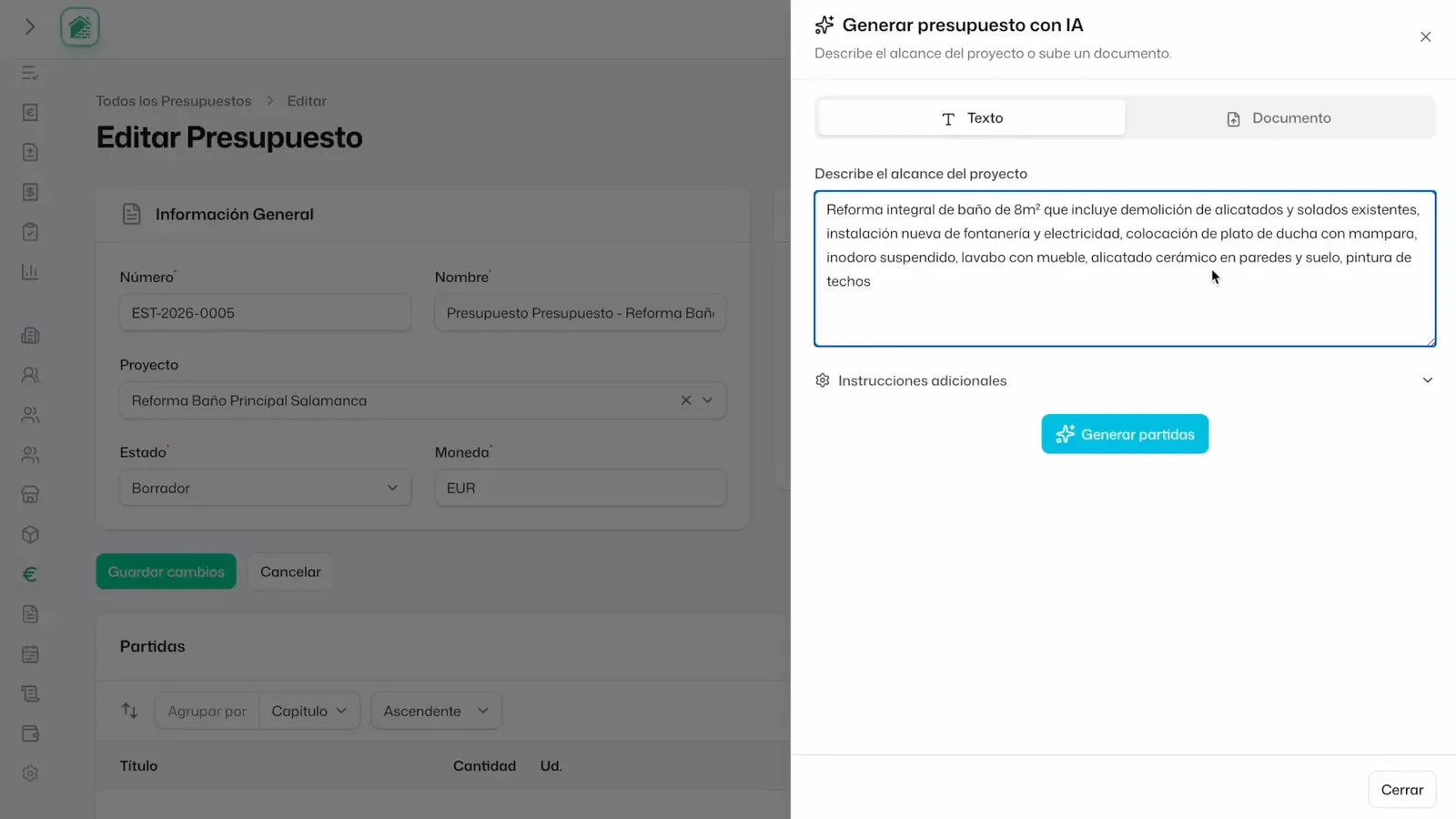
The part I'm proudest of is the AI estimate generator. Upload the client's PDF or DOCX, or describe the job in plain language, and it comes back with structured line items, quantities, and prices from the studio's own history, each with a confidence badge so a human still decides. An estimate that used to eat a Sunday takes about 7 minutes. Invoice and delivery-note OCR does the same trick for paperwork, and material purchasing closes the loop from request to order.
The field app
The field app is deliberately small. iOS and Android, built for dirty hands, sun, and one bar of signal.
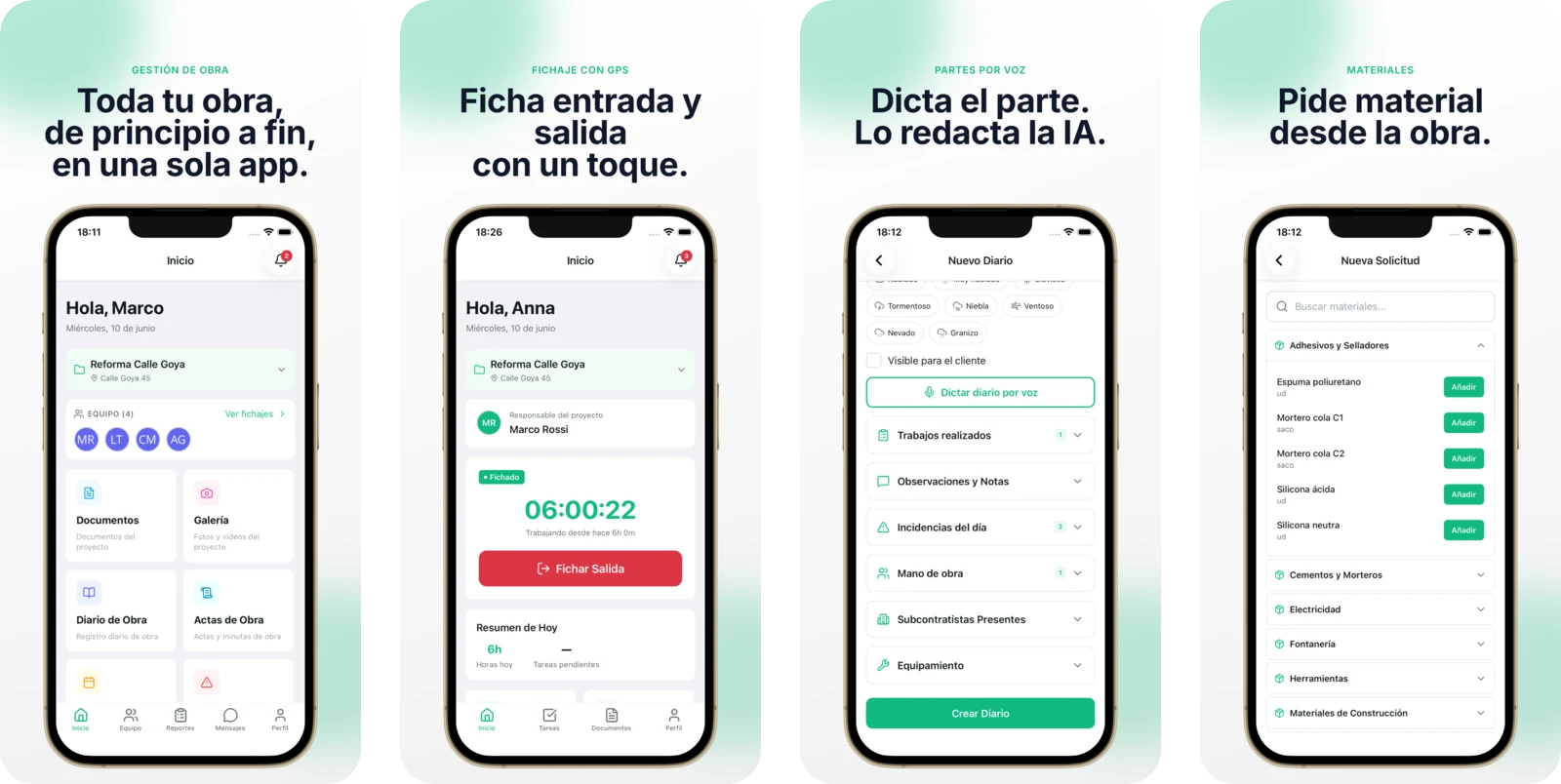
- GPS clock-in with photo verification. Hours land on the right project, no arguments about who was where.
- Bulk team clock-in. The site supervisor checks in the whole crew in one tap instead of chasing eight phones.
- Voice-dictated work reports. Talk for thirty seconds and the AI turns it into a structured report. Nobody on a site types one.
- Incidents with photo attachments. A crack, a wrong delivery, a wall that isn't where the plan says it is.
- Material requests. From the site straight into the purchasing workflow in the admin.
- Quality inspection checklists. So "we checked it" has a record behind it.
- Real-time project chat. The WhatsApp replacement, except it's attached to the project and searchable.
The client app sits on the other side of the same data: planning, photo galleries by phase, documents, messaging. What clients don't see is costs and margins, sanitised before they leave the backend. Studios that put clients on it report up to 70% fewer phone calls, which I suspect is the real reason people keep paying. The platform now manages more than 10,000 documents, and studios say it saves them over 30 hours a month.
Stack
- Backend and admin: Laravel + Filament, multi-tenant across studios, projects, workers, subcontractors, and clients
- Mobile: two React Native + Expo apps, one for the field and one for clients
- AI: estimate generation from natural language and PDF/DOCX, invoice and delivery-note OCR, semantic document search, natural-language task creation, voice-to-report
- Localisation: English, Spanish, Italian, across product and site
- Hosting: EU-hosted, GDPR compliant, 256-bit encryption
I reused boring infrastructure everywhere. As the only person on the build, every feature has to pay rent, so the bespoke code is just what makes Tabiquo Tabiquo: the AI pipelines, the multi-role data model, the three languages. More on the decisions in the case study.
What's next
Billing is month-to-month with a 30-day free trial, no lock-in, and a data export, because I'd rather earn the renewal than trap it. Next is a quieter field app, offline first with fewer taps, and the AI eating more of the admin nobody enjoys. I'd love to claim a grand roadmap, but honestly it's whatever the studios complain about next.
I'm Andrea Giannini, a full stack developer and product builder based in Valencia. You can try Tabiquo free at tabiquo.com.