
May 22, 2026
I Rebuilt Phraase, My Swipe-Based Phrasebook
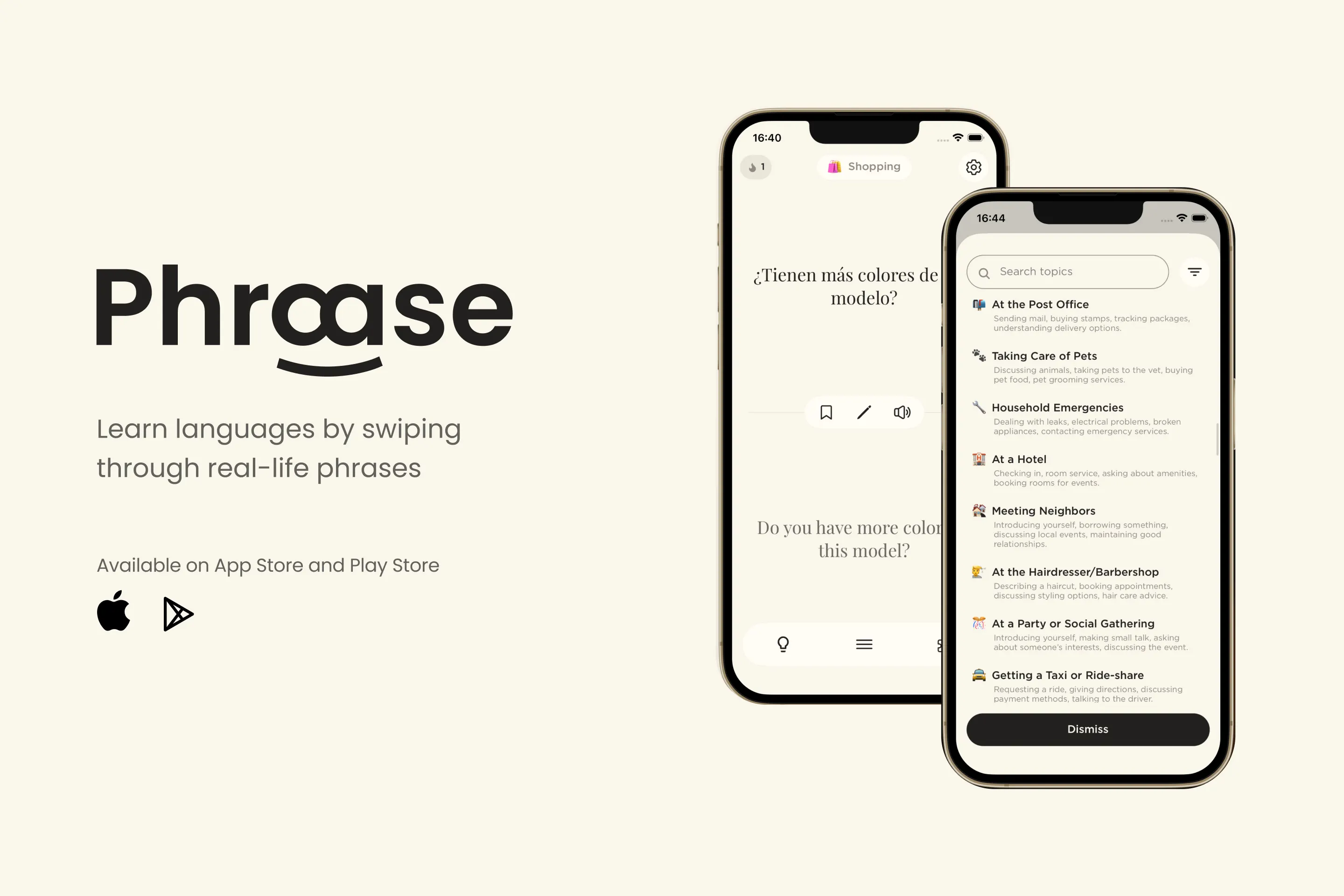
I'm Italian and I live in Spain, so I've spent a lot of time trying to actually speak Spanish, not just pass a test. Most language apps hand you long lists of phrases to memorize, and almost none of them stick. The problem is context. A phrase you read in a flat list, with no situation attached to it, leaves your head about as fast as it entered. The ones that stay are the ones you can picture yourself saying to a real person.
That's the problem I built Phraase to solve.
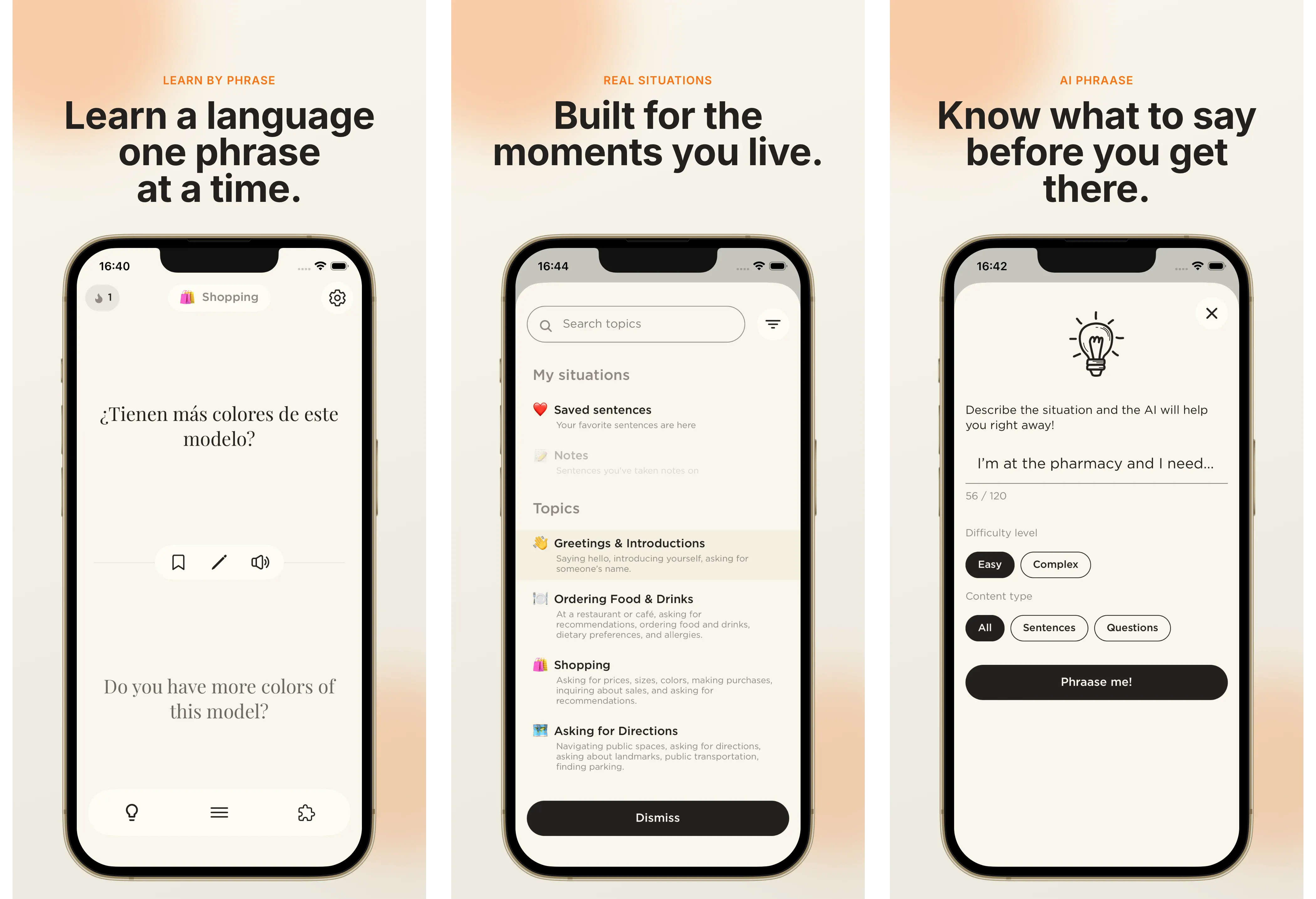
Phraase is a swipe-based AI phrasebook. You pick the language you speak and the one you're learning, then you browse thousands of phrases grouped by topic and everyday situation. You swipe through them one at a time, hear each one pronounced out loud, and save the ones that stick. When you want to lock them in, you quiz yourself.
Why I built it
There's a bigger idea underneath all this. I burn hours scrolling social media, and most of it leaves me with nothing. I kept thinking about that reflex, the endless swipe, and wanting to point it at something good instead. The bet behind Phraase is that the same scroll can feed you sentences in a new language instead of outrage. Repetition is how phrases stick, and scrolling is repetition you don't even notice you're doing.
The honest risk is that scrolling sentences gets boring a lot faster than scrolling drama. That's the part I'm still working on, and it's a big reason the new version leans on streaks, daily goals, and XP. Small hooks to keep the habit alive once it stops feeling new.
The other thing I noticed building this is that saying the phrases out loud, over and over, did more for my pronunciation than anything else. The app plays every phrase for you, but it can't hear you say it back yet.
I first shipped Phraase about two years ago. It was a decent first version that I hadn't touched in a while. I just published a big update, and it's a different app now.
Here's what changed:
- A full UX redesign. The swipe flow and the saving experience were rebuilt from scratch. It feels fast and obvious now, the way it should have from day one.
- Liquid Glass on iOS. On iPhones that support it, the top and bottom bars and the buttons now use Apple's new Liquid Glass look. On older iPhones and on Android they fall back to the normal design.
- AI content. Phrases, examples, and translations are now generated with Google Gemini 3.0 Flash, up from the 1.5 model the app used before. Auto-translation covers six languages.
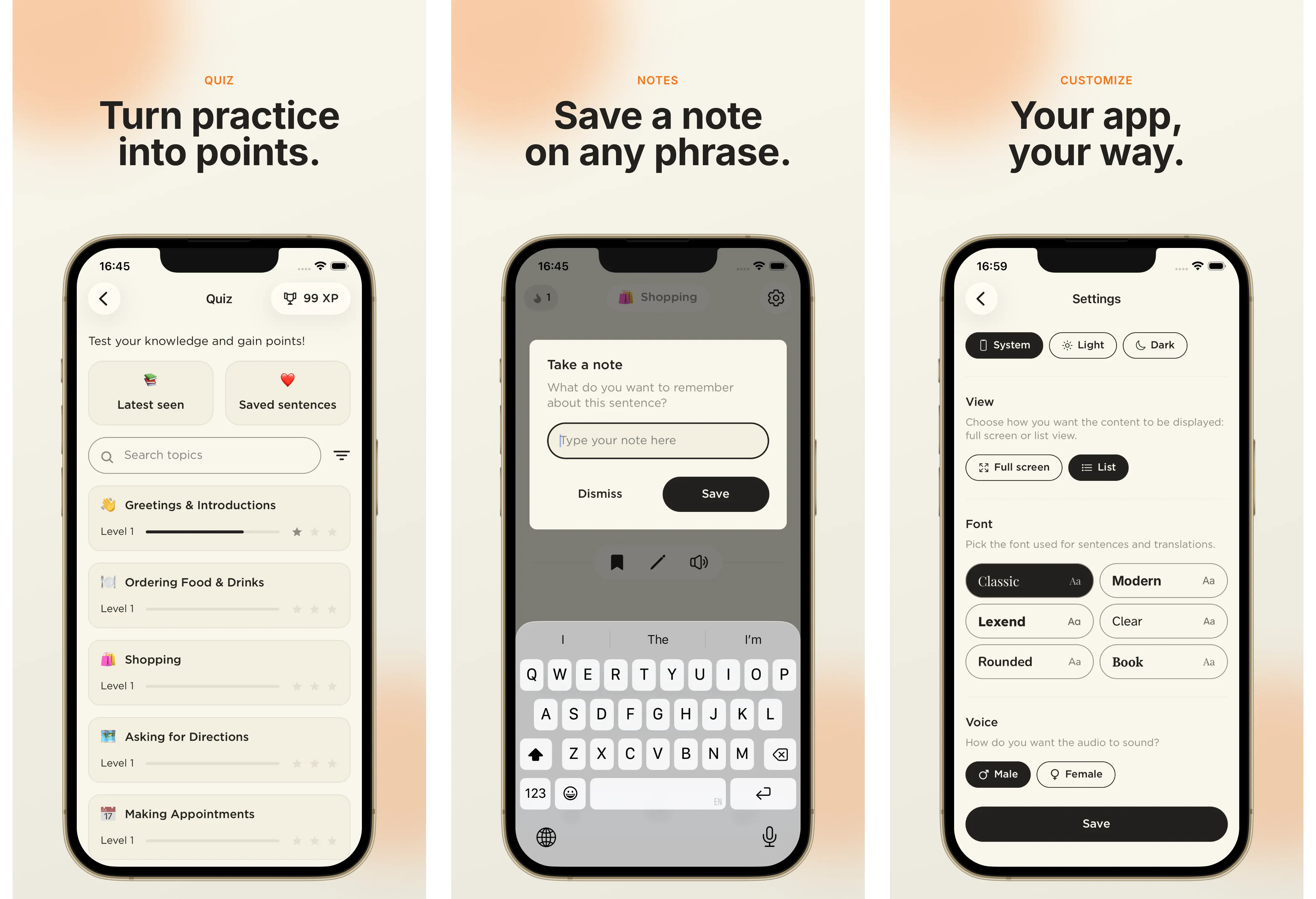
- Audio pronunciation. Every phrase can be played out loud with Google Cloud Text-to-Speech, with male and female voices.
- Gamification. Streaks, daily goals, XP, and a leaderboard, so there's a reason to come back tomorrow.
- Quizzes. Multiple choice, fill-in-the-blank, and reorder-the-words, to turn passive reading into active recall.
There's a part of this update that wasn't visible to users but mattered just as much. The codebase was two years old, and it showed. Before I added a single feature, I went through the whole thing with Claude Code and cleaned up two years of debt across the backend and the frontend.
If you read my last post, this is the opposite of that. There I vibe coded a throwaway bot I planned to delete in a week. Phraase is a real product I ship and maintain, so here the AI did the boring work: reading code I half-remembered, spotting slow database queries, pointing out indexes I had never added, and flagging security risks, all before I built anything new on top. Same tool, very different job.
Stack
- App: React Native + Expo (SDK 55), Expo Router, Zustand, TanStack Query, Firebase Auth
- Backend: Node.js + Express, Sequelize (MySQL / MariaDB)
- AI and content: Google Gemini 3.0 Flash, Google Cloud Text-to-Speech, Google Cloud Translate
- Deployment: CI/CD with GitHub Actions and Docker, self-hosted on my own server
- Tooling: Claude Code (Opus) for the codebase audit and security fixes
What's next
Right now the app speaks to you, next it should listen. There's no pronunciation check yet, even though saying phrases out loud is what helped me most. I want to add speaking practice: record yourself saying a phrase and get feedback on how close you got. Hearing a phrase is one thing, saying it without freezing up is the part that actually matters when you're standing in front of someone.
I'm Andrea Giannini, a full stack developer and product builder based in Valencia. You can download Phraase at phraase.com/download.